Why Adelaide's Western Suburbs Strata Complexes Need a Year-Round Maintenance Schedule
Reactive maintenance is the single most expensive habit strata managers fall into. What a proactive year-round program covers across Adelaide's western suburbs, season by season.
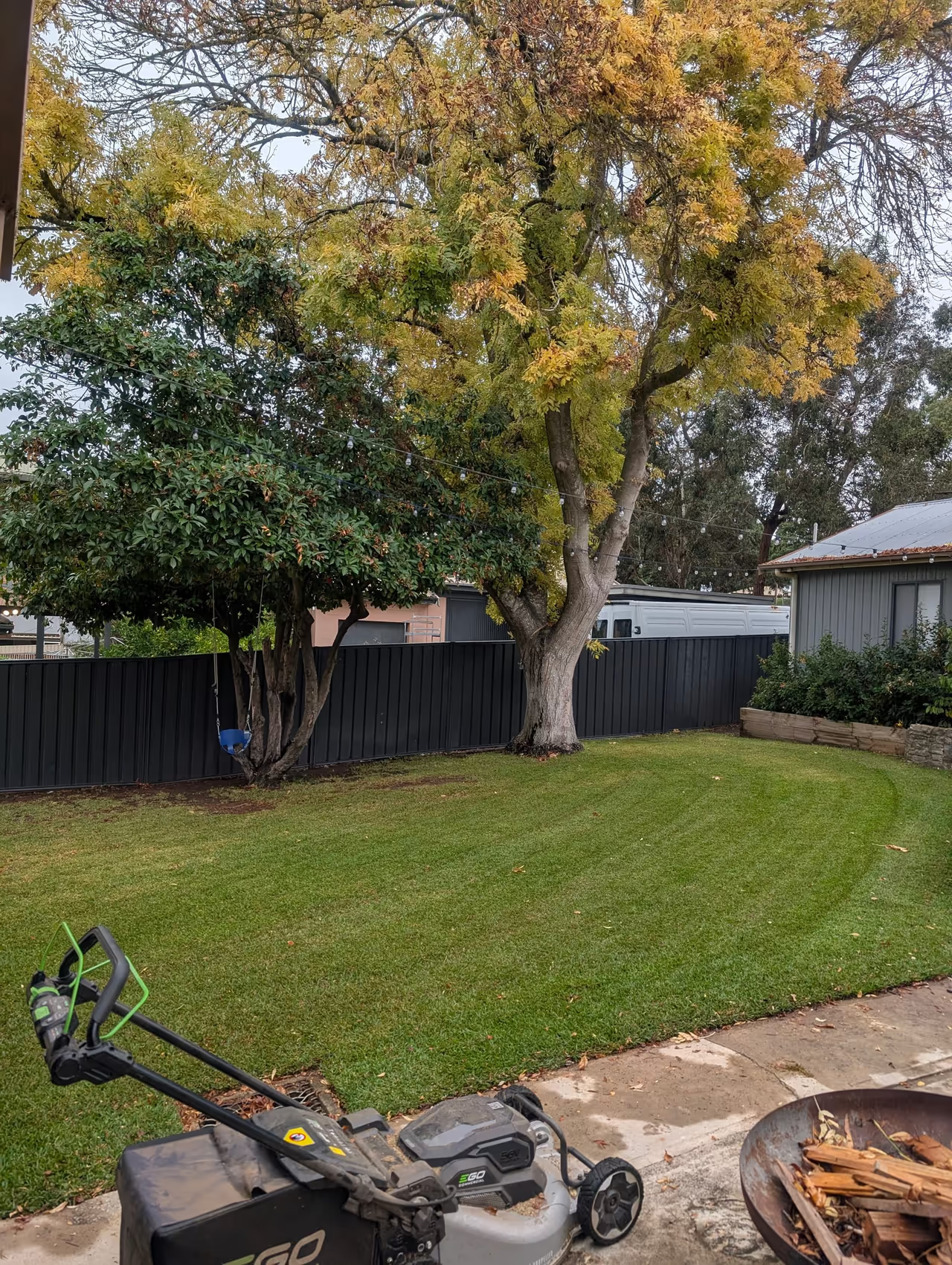
There is a particular type of phone call every strata manager in Adelaide knows. An owner has noticed the lawn at one of the Findon complexes is knee-high. Or the gutters at the Henley Beach site are visibly stuffed with leaves. Or the car park at Salisbury is so slick with moss that someone slipped on the weekend.
By the time those calls come in, the work is already overdue, the price has already gone up, and the committee is already irritated. That is what reactive maintenance looks like in practice, and on a portfolio of any size, it is the single most expensive habit a strata manager can fall into.
A year-round maintenance schedule fixes this. It is not a luxury, and on the budgets we see come out of Adelaide western suburbs strata complexes, it is almost always cheaper than reactive maintenance over a full financial year.
What reactive maintenance actually costs
Reactive maintenance has three hidden costs that committees rarely add up until they are sitting through an AGM with frustrated owners.
The first is the call-out premium. One-off jobs cost more per hour than scheduled work. Contractors are juggling them around their regular runs, so the labour rate goes up and the truck shows up when it can, not when you want it.
The second is escalation. Lawns that are mown weekly take fifteen minutes. The same lawn left for six weeks takes an hour, needs the catcher emptied four times, and stresses the turf in summer to the point of patch repair. Hedges left untouched for two seasons need cutting back hard instead of trimming, and they look terrible until spring growth fills them back in.
The third is owner complaints, which are not a line on any invoice but show up as strata-manager hours spent fielding emails. Every one of those is time that could have been spent on something the committee actually values.
What a year-round schedule covers in Adelaide
The actual content of a strata maintenance program shifts through the seasons. A good one looks roughly like this.
Spring (September to November) is when growth ramps up. Mowing frequency lifts from monthly to fortnightly on most sites. Garden beds get a weed and a fresh mulch. Hedges are trimmed to shape. Common-area irrigation is checked and reset for the warmer months. This is the visible reset that owners see and that drives committee satisfaction for the year.
Summer (December to February) is the high-frequency period for lawns. Weekly mowing on most sites, with cuts kept slightly higher to protect turf from drought stress. Blower-vac sweeping picks up dropped seed pods and prunings. Edge work and hedge tipping keep complexes looking sharp through the period when visitors and prospective owners are most likely to be on site.
Autumn (March to May) is the make-or-break window for the year. Leaves come down. Gutters need flushing before the winter rain. Trees get formative pruning while the canopy is thinning. We cover the autumn workload in detail in a separate article on autumn leaf cleanup, because it is the most under-budgeted season on most strata portfolios.
Winter (June to August) is the quiet season for growth and the right time for structural work: heavier tree pruning, hard surface pressure washing, retaining wall checks, drainage clears. Mowing drops to monthly or less.
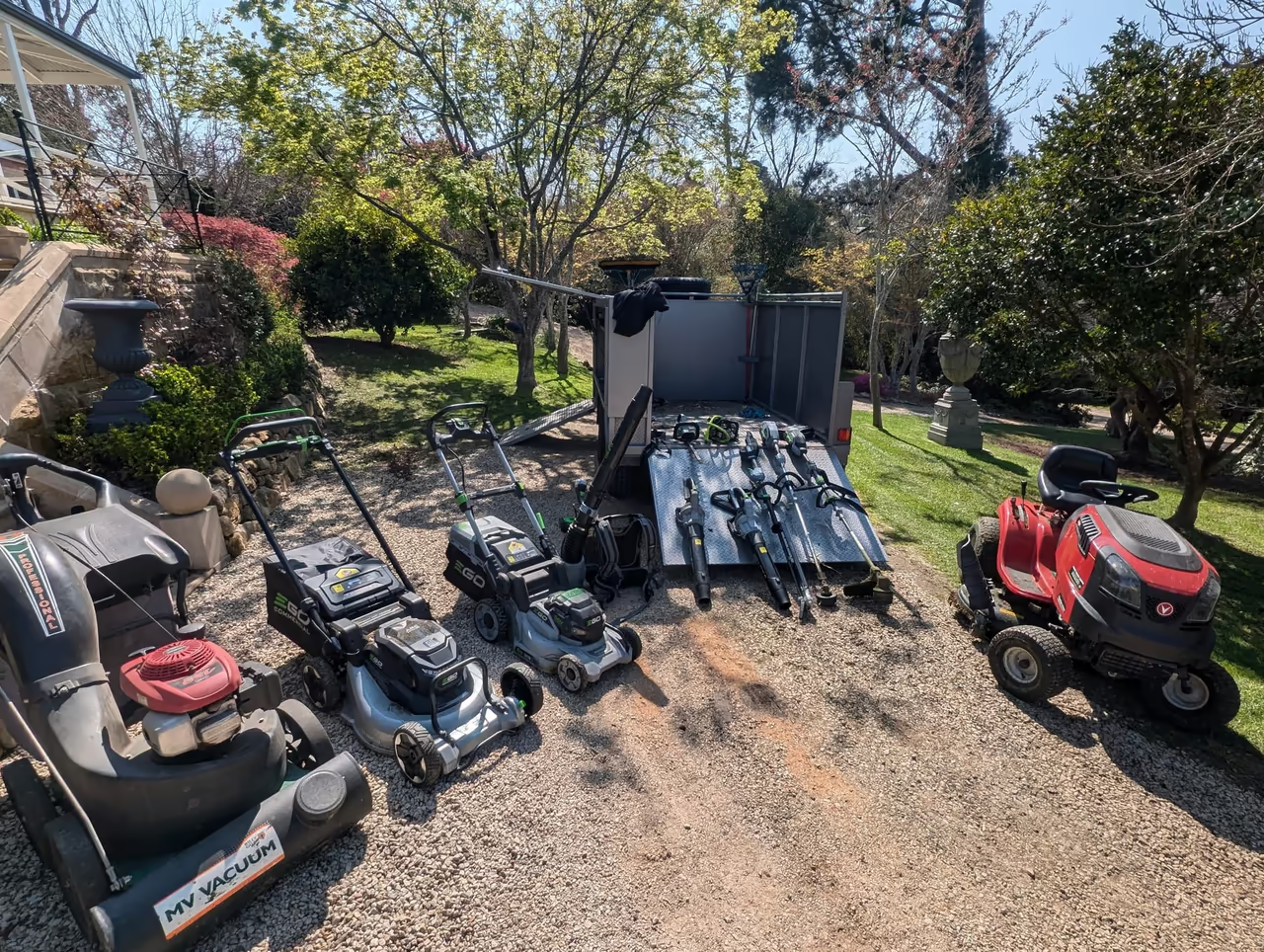
Why Adelaide’s western suburbs need this specifically
A few things make the western and north-western suburbs a particularly poor place to try to run a strata portfolio reactively.
Mature tree canopy. Findon, Woodville, Seaton and Henley Beach have older complexes built among established gums, planes and jacarandas. Leaf and pod drop is genuinely heavy. A complex that looks tidy in early March can be unrecognisable by late April.
Coastal wind exposure. The prevailing southerly through summer drives leaf litter into corners, against fences, and through gutter mouths. Cleanup frequency on west-of-Port-Road sites is meaningfully higher than for an equivalent property in the inner east.
Mixed building age. Older masonry walls hold moisture longer, so pressure-washing intervals are tighter to keep mould and moss at bay. Newer Colorbond cladding does not — the schedule needs to reflect the site, not a template.
Reticulation systems of every vintage. From hand-watered beds to controller-driven drip lines, irrigation needs season-by-season checking. A scheduled program catches a leaking dripper in November rather than discovering it through a brown patch in February.
The committee budget conversation
The most useful thing about a year-round program for a committee is that it turns a spiky cost into a flat one. Instead of three invoices in autumn for $4,200 of leaf and gutter work that nobody saw coming, the committee approves one monthly figure that covers the whole year of scope. That number does not shift with the seasons, even though the workload behind it does.
That predictability is the entire reason strata committees prefer programs over ad-hoc engagements. It also means the maintenance line in the next AGM forecast is genuinely accurate, which is something committees notice.
How to switch from reactive to scheduled
If a portfolio is currently running on reactive or quarterly maintenance and the committee is open to a program, the move usually takes three steps.
- Audit the current spend. Pull the last 12 months of maintenance invoices and total them. This is the actual reactive cost, and it is almost always higher than committees expect.
- Get a scheduled quote for the same scope. A scheduled program for the same work will quote lower per site, because the contractor is no longer pricing call-out premiums into every visit.
- Set the cycle and the reporting standard. Visit frequency, the seasonal scope, photo reporting after each visit, and how invoices are structured. Lock those in writing for the year.
We do this audit free for strata managers and committees in the Adelaide metro area and the Hills. There is no obligation to switch contractors at the end of it — the audit alone usually pays for itself in the first quarter, even if nothing else changes.
If you manage strata sites across Adelaide’s western and north western suburbs, or anywhere else in the metro area, get in touch. We will walk through the portfolio and put a number on what a scheduled program would actually cost.