How to Choose a Strata Grounds Maintenance Contractor in Adelaide
The equipment on the trailer predicts a strata contractor's performance better than the quote does. Five questions to ask before you sign.
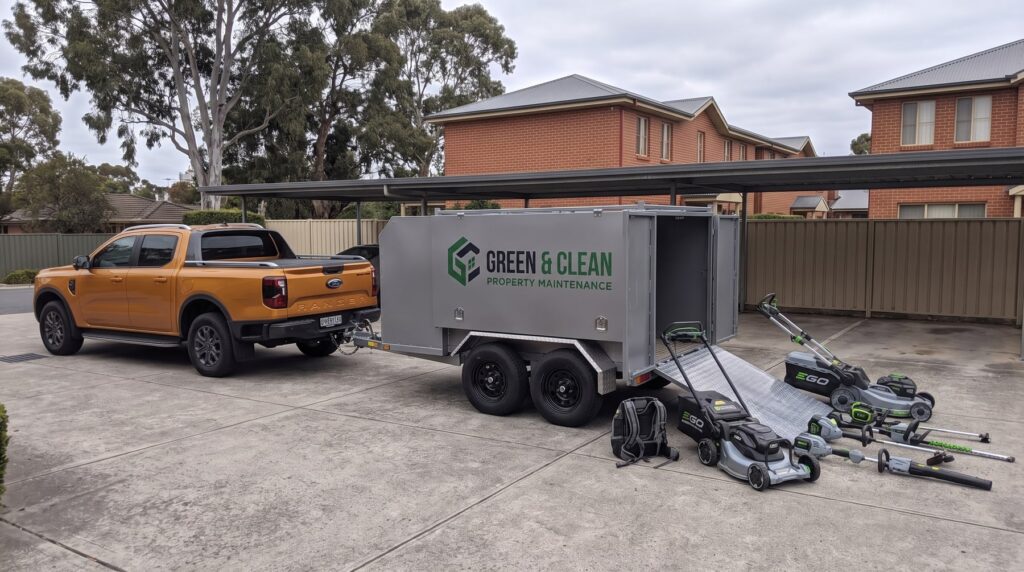
When a body corporate compares grounds maintenance quotes, the conversation is usually about price, frequency and references. The most predictive question is the one almost nobody asks: what equipment will actually roll off the trailer on a normal visit?
Equipment is cheap to ask about, easy to verify, and it determines what a contractor can finish in a day, what gets deferred to the next visit, and what the site looks like afterwards. It is also the variable that is hardest to change once the contract is signed.
You can usually hear it before you see it. A mower under-powered for the lawn area whining through a long cut. A blower doing more rearranging than removing. The wrong-sized hedge trimmer chewing through a hedge instead of cutting it.
What good strata equipment looks like
For a typical Adelaide strata complex of four to ten units, the kit that needs to arrive on a normal maintenance visit is fairly specific.
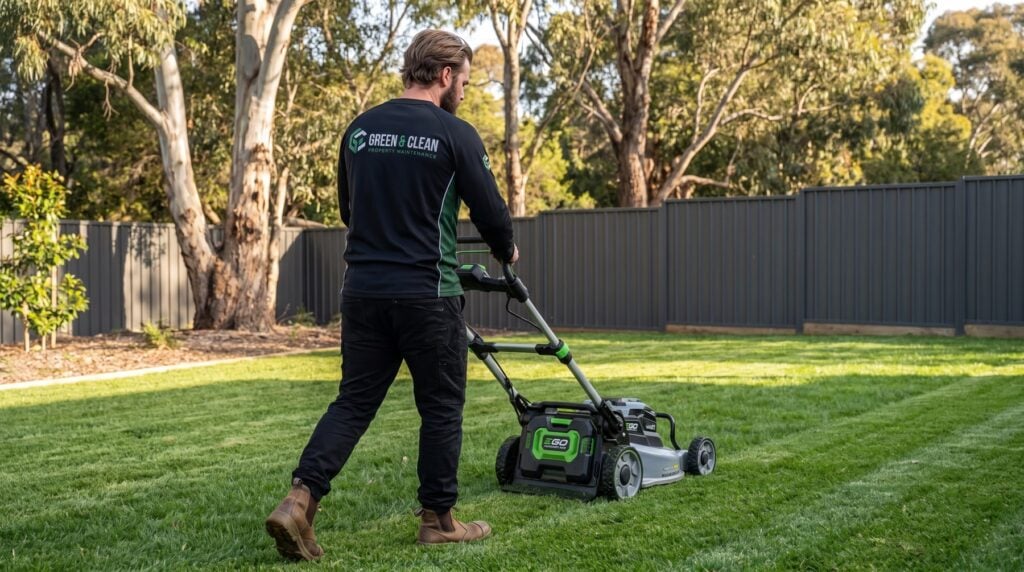
A commercial walk-behind mower sized for the largest single lawn area on the site. For most western-suburbs complexes that is a 21-inch self-propelled deck. For larger sites it is a 30-inch or a stand-on. Domestic mowers are not built to run all day for thirty weeks of the year, and they fail visibly in summer.
A purpose-built leaf vacuum, not just a backpack blower. A blower moves leaves into corners. A vacuum removes them. The distinction matters because leaves blown into the corner of a strata car park stay there until the next wind moves them somewhere else.
A proper edger with a steel blade, not a string trimmer pretending to be one. Committees can pick the difference between a clean edge and a frayed one from across the courtyard.
A blower-vac for hard surfaces, separate from the leaf vacuum. Strata car parks and walkways need a quick clean after every visit, and the wrong tool for it makes the work take twice as long.
Commercial two-stroke or battery equipment for blowers, trimmers and saws. Stihl, Husqvarna or equivalent. Domestic units fail under continuous load, and a contractor protecting fragile gear will quietly shorten the work to suit it.
A trailer with a proper green-waste cage and a legal destination for what goes in it. Where the green waste goes needs to be the contractor’s problem, not the corporation’s.
Five questions to ask before you sign
These are worth asking at the quoting stage, while there is still leverage. The answers tell you most of what you need to know about whether a recurring program will hold up.
-
What size mower will you use on our biggest lawn area, and is it self-propelled? This separates contractors who have looked at the site from contractors who have looked at the address. A 21-inch self-propelled is the floor for strata work. Smaller domestic decks are a red flag.
-
Do you carry a leaf vacuum, or just blowers? A vacuum is a meaningful investment and contractors who own one will tell you plainly. Contractors who do not will reframe the question. It matters most in autumn and it matters on every visit.
-
Where does the green waste go, and can you show me? A real contractor has a legal destination: a transfer station, a green-waste facility, or a contracted pickup. Vagueness here means it is being tipped somewhere it should not be, or going into somebody else’s bins.
-
How often are your mower blades sharpened? The correct answer is weekly through the growing season. Blunt blades tear grass tips, which brown off and look terrible for a week.
-
What happens if a tree comes down between visits, and who handles the cleanup? Any site with mature trees will eventually have a windstorm event. The contractor should have an answer covering response window and pricing. Vague answers here become expensive surprises later.
The red flags
Some of this is visible the moment the contractor arrives to quote.
The ute is full of domestic gear. Fine for a suburban backyard. Not fine for a recurring strata contract with thirty-plus visits a year.
No leaf vacuum on the trailer. Especially obvious between March and May. A contractor without one will quote autumn work the same way they quote summer work, because they do not have the equipment to treat it differently.
Visibly worn or rusty kit. Old equipment is not automatically bad equipment, but rusted mower decks, frayed blower housings and bent edger guards point at maintenance that has been deferred. Deferred tools quietly make decisions for the operator about what gets done well and what gets skipped.
No certificate of currency to hand. A contractor who cannot produce public liability cover on request at the quoting stage is not a contractor a body corporate should be putting on common property.
The dollar reality
Committees sometimes assume that better equipment means a higher price. In strata work the opposite is usually true.
Better equipment finishes the same job in less time, which is how contractors with commercial kit price recurring programs competitively in the first place. The work also lasts longer. A properly mown lawn holds for a week. A properly cut hedge holds for a season. A properly cleared gutter holds until the next drop. Each of those reduces rework, and rework is where reactive contractor relationships go expensive.
The contractor with the wrong kit is not cheaper. They look cheaper on the first quote and more expensive on the third invoice.
What to lock into the scope of works
Equipment tells you what a contractor can do. The scope tells you what they have agreed to do. Get these in writing before the first invoice.
- Visit frequency by season, not an annual average. Fortnightly September to May and monthly June to August is a scope. Regular maintenance is a description.
- What is included on each visit and what is quoted separately. Tree work above three metres and major one-off pressure washing are commonly excluded, which is fine, as long as it is written down.
- Green waste leaves the site. Explicitly stated, including that the complex’s bins are not used.
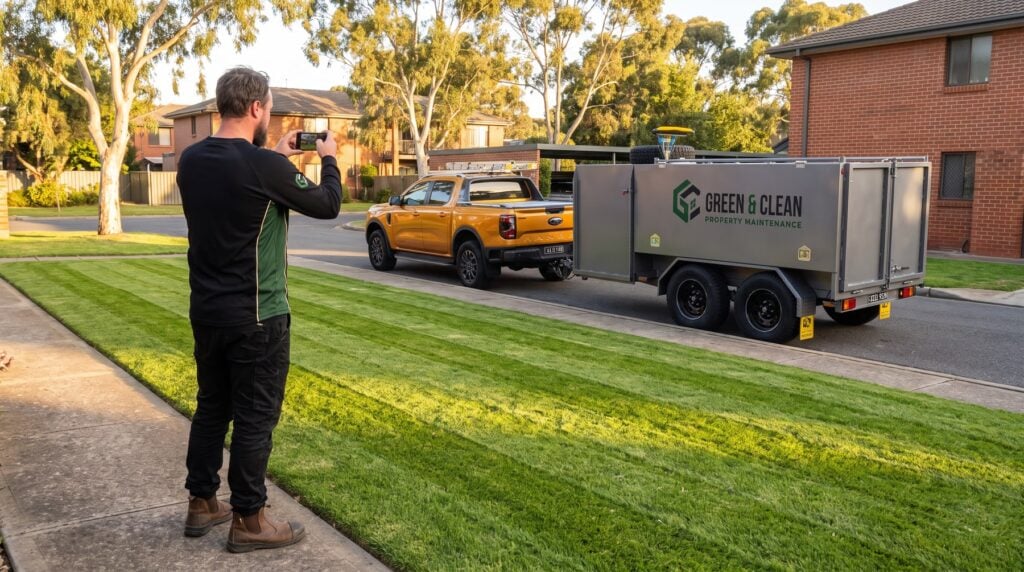
- Photo reporting after every visit, filed against the site and the date.
- How multi-site invoicing works if the manager runs a portfolio.
- The exit terms. A rolling program with a clean exit is a sign of a contractor who expects to be kept. Long lock-ins are a retention strategy, not a service.
The committee takeaway
Equipment is not the only thing that matters. Reliability, reporting, invoicing and insurance all matter too. But equipment is the variable committees skip past in the quoting conversation, and it is the one that quietly sets the ceiling on everything else.
If your portfolio is moving to a new contractor or auditing the current one, ask the five questions above while you are still comparing quotes. We answer all five up front on every site we quote, and the photo report after each visit is simply the documentation that the equipment was used as promised.
For strata complexes and bodies corporate across Adelaide and the Adelaide Hills, get in touch. We will walk the site, show you the kit, and quote a recurring program with the equipment specced to match.
Frequently asked questions
What should a body corporate look for in a grounds maintenance contractor?
+
Look for commercial-grade equipment matched to the site, a legal green-waste disposal destination, public liability insurance with a certificate of currency available on request, photo reporting after every visit, and a written scope that states visit frequency and what is excluded. Equipment is the item most committees skip and the one that is hardest to change after signing.
How do you switch strata grounds maintenance contractors mid-contract?
+
Check the current agreement for its notice period, which is commonly 30 to 90 days. Get committee or strata manager sign-off on the change. Request a handover that includes recent site photos and any keys, remotes or equipment held by the outgoing contractor. Then brief the incoming contractor on access, bin days, hazards and the existing scope.
Should a strata contractor carry a leaf vacuum or is a blower enough?
+
A blower relocates leaves, a vacuum removes them. On a strata site with shared car parks and common-area gardens, blown leaves end up in a corner or against a fence and come back with the next wind. On any site with a real autumn leaf load, a purpose-built leaf vacuum is the difference between a cleanup and a rearrangement.
Is a cheaper strata maintenance quote usually more expensive over a year?
+
Often, yes. Contractors with under-specified equipment take longer per visit and produce work that does not hold, so the site needs more frequent attention and more one-off call-outs. The cheaper quote tends to show up as a higher annual spend once rework and reactive jobs are added in.
What insurance should a strata grounds maintenance contractor hold?
+
Public liability insurance is the baseline, and the contractor should be able to send a certificate of currency on request without hesitating. Where they employ staff, workers compensation cover applies as well. Ask for the certificate at the quoting stage rather than after an incident.
How often should mower blades be sharpened on a strata site?
+
Weekly during the growing season. Blunt blades tear grass tips instead of cutting them, the torn tips brown off within a day or two, and the lawn looks poor for the rest of the week. It is the most common reason a recently mown strata lawn still looks bad two days after the visit.